Silver melt value is the weight of the item, times the fraction of it that is silver, times the spot price per troy ounce, with the weight expressed in troy ounces.
Most coins and bars are weighed in grams, so one extra step is usually needed: divide the grams by the number of grams in a troy ounce. The sections below cover that conversion, the weights to use for US silver coins, and three worked examples. If you only want an answer for a pile of coins, the melt value calculator and chart does the arithmetic for several coin types at once.

The three inputs
Weight. The gross weight of the item, usually in grams for a coin and in troy ounces for a bullion bar.
Fineness. The share of the item that is silver. A 90% silver coin is nine-tenths silver by weight, so you divide a percentage by one hundred to get the fraction. Bars and rounds are often stamped in parts per thousand instead; divide that stamp by one thousand.
Spot price. The market price of one troy ounce of silver at the moment you calculate. It changes through the trading day, so type in a current quote rather than reusing an old number. This guide uses a made-up sample price in every example so you can check the arithmetic without a live quote.
Troy ounces, not ordinary ounces
Precious metals are priced per troy ounce, which is heavier than the ounce on a kitchen scale. A troy ounce is 480 grains and equals 31.1034768 grams, while an ordinary (avoirdupois) ounce is 437½ grains. If you multiply the spot price by a weight in ordinary ounces, the result comes out too low. Convert to troy ounces first.
Sanity check: one gram is 1 ÷ 31.1035 = 0.0321507 troy oz. If you get 0.32, you are off by a factor of ten; a gram should be roughly one thirtieth of an ounce.
The conversion this guide uses is 31.1035 grams per troy ounce, the exact figure rounded to six digits. It changes none of the cent amounts in the examples below.
The term you will see in coin tables is ASW, short for actual silver weight: the troy ounces of pure silver in one coin, which is weight × fineness ÷ 31.1035. Using a published ASW lets you skip the first two steps, but the full calculation is a good way to check one.
Weights for common US silver alloys
These are the gross weights and silver content published in the NGC melt value table. Silver content is in troy ounces of pure silver per coin. For the series each row covers, see the pages on dimes, quarters, half dollars, silver dollars and war nickels.
| Alloy | Coin | Weight, g | ASW, troy oz |
|---|---|---|---|
| 90% silver | Roosevelt dime (1946-1964) | 2.5 | 0.0723 |
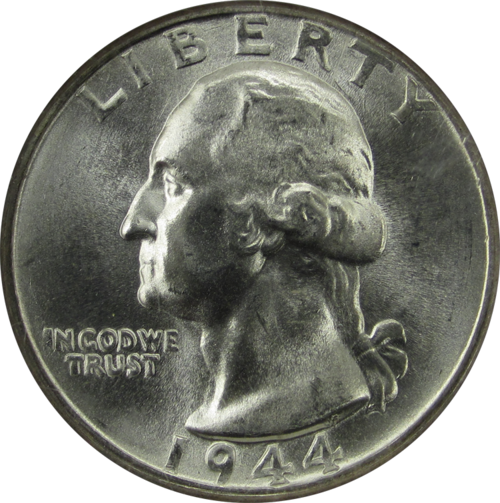
| Washington quarter (1932-1964) | 6.25 | 0.1808 | |
| Franklin half dollar (1948-1963) | 12.5 | 0.36169 | |
| Morgan or Peace dollar | 26.73 | 0.7734 | |
| 40% silver, 60% copper | Kennedy half dollar (1965-1970) | 11.5 | 0.1479 |
| 35% silver, 56% copper, 9% manganese | War nickel (1942-1945) | 5 | 0.0563 |
The table lists the series NGC publishes: dimes (1946-1964), quarters (1932-1964) and Franklin halves (1948-1963) are 90% silver, and so is the 1964 Kennedy half dollar. Kennedy halves dated 1965-1970 are 40% silver. Older silver designs are not listed here; How to tell if a US coin is silver explains how to identify them.
Three worked examples
Each example uses a sample silver price of $50 per troy ounce. That price is made up for arithmetic practice and is not today’s price. Substitute a current quote to get a current result.
A 90% silver quarter
- Weight: 6.25 g.
- Silver in the coin: 6.25 × 0.9 = 5.625 g.
- Troy ounces: 5.625 ÷ 31.1035 = 0.18085 troy oz.
- Melt value at the sample price: 0.18085 × $50 = $9.04 (9.0425 rounded to the cent).
The published ASW for the quarter is 0.1808 troy oz, which matches the 0.18085 result to four decimal places. Multiplying 0.1808 by $50 gives exactly $9.04, so the shortcut agrees here.
A 40% silver Kennedy half dollar
- Weight: 11.5 g.
- Silver in the coin: 11.5 × 0.4 = 4.6 g.
- Troy ounces: 4.6 ÷ 31.1035 = 0.14789 troy oz.
- Melt value at the sample price: 0.14789 × $50 = $7.39 (7.3945 rounded to the cent).
The published ASW is 0.1479 troy oz. If you multiply that rounded figure by $50 you get 7.395, which a naive round-half-up turns into $7.40, one cent higher. Keep the extra digits through the calculation and round only the final dollar amount.
An item you can only weigh in grams
For a bar or round with no published silver weight, use the stamped fineness and your own scale reading.
- Weight on the scale: 50 g, stamped 999 (0.999).
- Silver in the item: 50 × 0.999 = 49.95 g.
- Troy ounces: 49.95 ÷ 31.1035 = 1.60593 troy oz.
- Melt value at the sample price: 1.60593 × $50 = $80.30 (80.2965 rounded to the cent).
Sterling silver is 92.5% silver, so sterling pieces use a fineness of 92.5. Weigh only the silver part: stones, weighted handles and other metals add weight but no silver. Scales also differ, and a small error in grams carries straight through to the dollar figure, so a weight read from a kitchen scale is an estimate.
A small check for your own numbers
Enter a weight, a fineness and a spot price to compare your hand result. Nothing is stored or sent anywhere.
For a mixed bag of dimes, quarters and halves, the junk silver calculator by face value is quicker than adding up coins one by one, and the silver coin value chart lists every US silver coin.
What melt value does not tell you
Melt value is the worth of the metal at the spot price. It is a reference point, not an offer. A dealer’s offer can land below, at or above melt depending on the item, the dealer’s costs and collector demand, so melt is a benchmark, not a promised price. To compare a real quote with melt, use the dealer offer vs melt value check. This site does not buy or sell coins or give investment advice.
Methodology and sources
This section describes how the numbers on coinmeltchart.com are produced, so you can reproduce them.
- Spot price. The site has no live price feed connected, so every tool uses the spot price you type. Example prices in guides are made up and labelled as samples. Nothing here is a quote.
- Weights and silver content. Gross weights and ASW come from the NGC coin melt value table. The tools use the published ASW rather than recomputing it, so small differences from your own gram-based arithmetic, usually a fraction of a cent per coin, are expected.
- Constant. One troy ounce is 31.1034768 grams, from the Wikipedia troy ounce article; the guides use 31.1035 for hand calculation.
- Rounding. Troy ounces are shown to four decimal places where a published figure has four, and dollar amounts are rounded to the nearest cent once, at the end.
- Update cadence. Weights change only if a source corrects them, and are rechecked when a page is revised. The date at the top of each page is its last review date.
- Who runs the site. See About coinmeltchart.com, the contact page, the privacy policy and the terms of use.